Research Themes
Astrocyte plasticity underlying memory
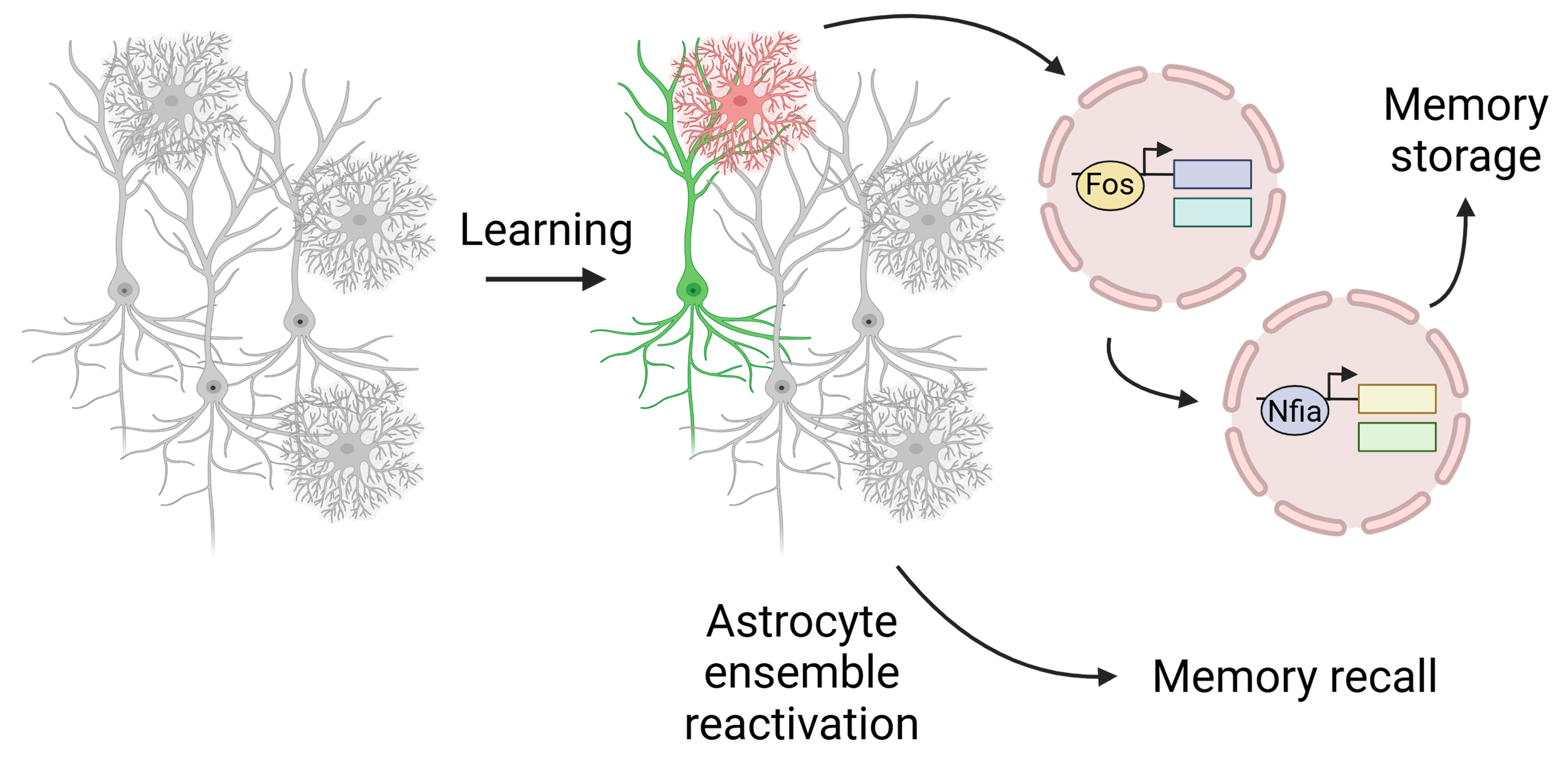
Astrocytes detect, decode, and direct synaptic activity. However, the mechanistic basis for how astrocytes modulate neuronal activity is poorly understood, as is how this function manifests at higher levels as control of complex behaviours and cognition. Our lab is interested in understanding how reciprocal astrocyte-neuron interactions mediate the function of neural circuits and the cognitive processes they give rise to. In particular, we study how experience-dependent astrocyte plasticity enables complex cognitive processes such as memory. We recently identified that associative fear learning induces molecular responses within an ensemble of hippocampal astrocytes to regulate memory storage and recall (Williamson et al., Nature 2025). Building on these findings, we are actively working to dissect the cellular and molecular mechanisms by which astrocyte ensembles control the plasticity and function of memory circuits.
Astrocyte function in disease states
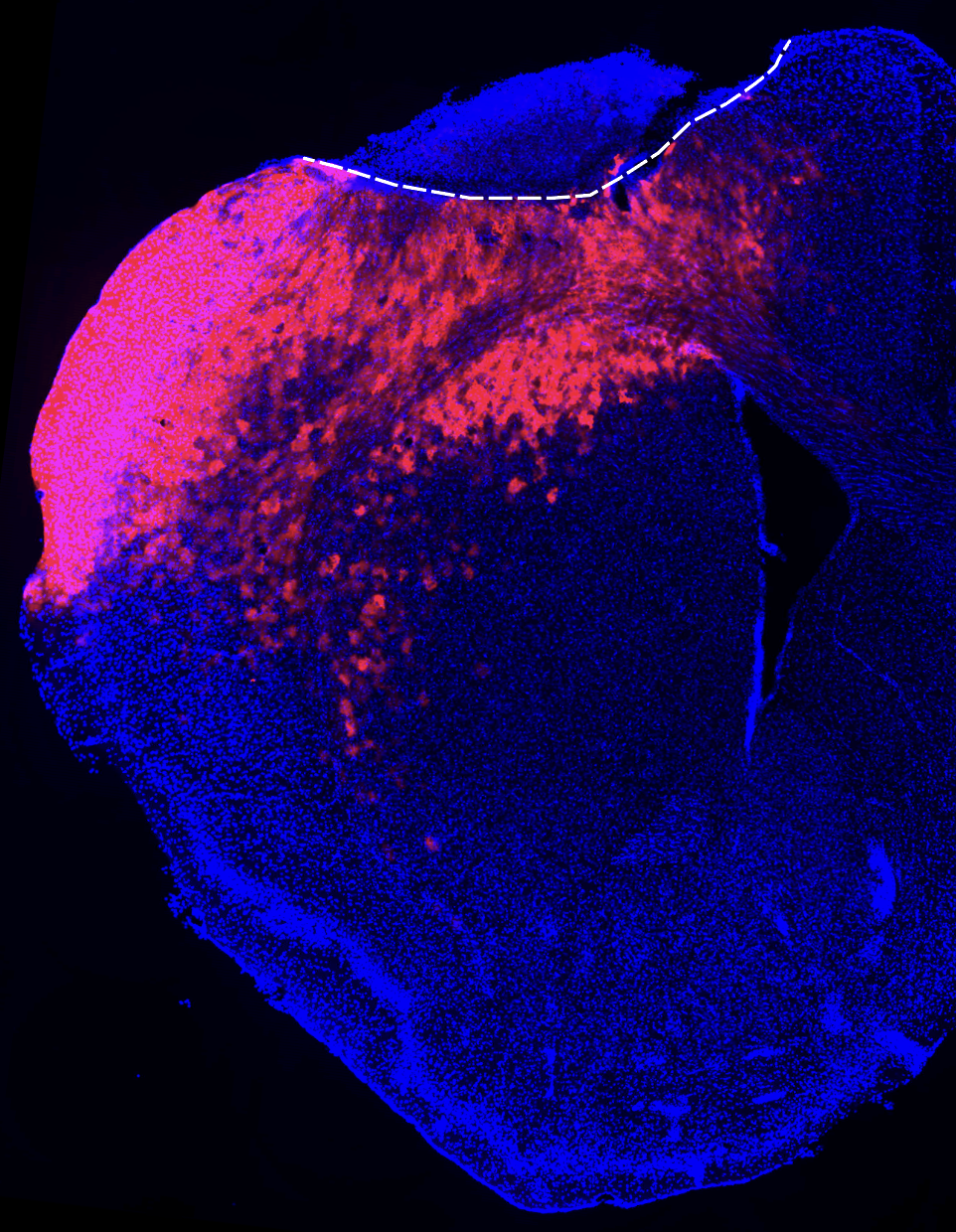
We interested in understanding fundamental mechanisms of disease, with a particular interest in neural repair after stroke. Astrocyte responses to stroke have beneficial functions, such as containing damage and promoting repair processes (Williamson et al. Cell Reports, 2021; Nature Communications, 2023). We study mechanisms by which astrocytes promote neural repair after stroke, with the aim of identifying tractable molecular targets. However, the extent to which astrocytes are able to assume these adaptive functions while maintaining their homeostatic functions is not well understood. Therefore, we also study how astrocyte responses to stroke might be suboptimal for long term functional recovery, focusing on dysfunctional astrocyte-neuron interactions.
In addition to stroke, we have active collaborations to study a broad range of diseases.
Functional diversity of astrocyte subpopulations
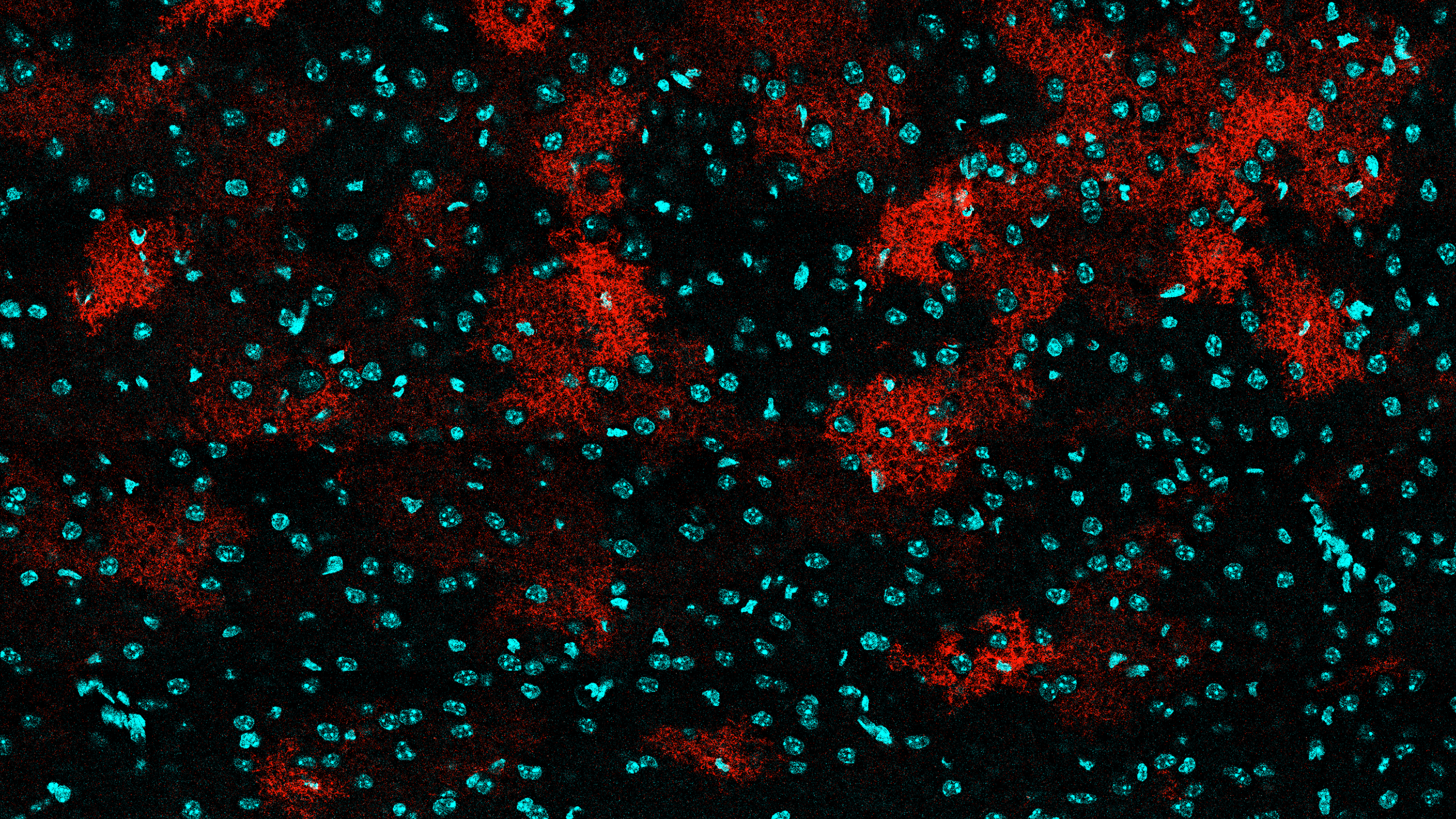
Astrocytes have been historically viewed as a relatively homogeneous population of cells. In contrast, numerous neuronal subpopulations have been identified and catalogued based on their molecular, anatomical, morphological, physiological, and functional properties. Emerging evidence suggests that astrocytes are not as homogeneous as they were once considered, with findings of subsets of astrocytes that differ within and across brain regions based on molecular, morphological, or physiological criteria. However, our understanding of the nature of astrocyte diversity has been hindered by a poor understanding of the extent to which this observed diversity translates into the existence of subpopulations of astrocytes with distinct functions. We recently identified a molecularly-defined subpopulation of astrocytes that is uniquely adept at promoting synapse formation and circuit plasticity across the contexts of cortical development, learning, and brain repair (Woo*, Williamson*, et al., Nature, in press). These findings provide a foundation for understanding the nature and functions of astrocyte subpopulations.
Developing new tools for glial biology
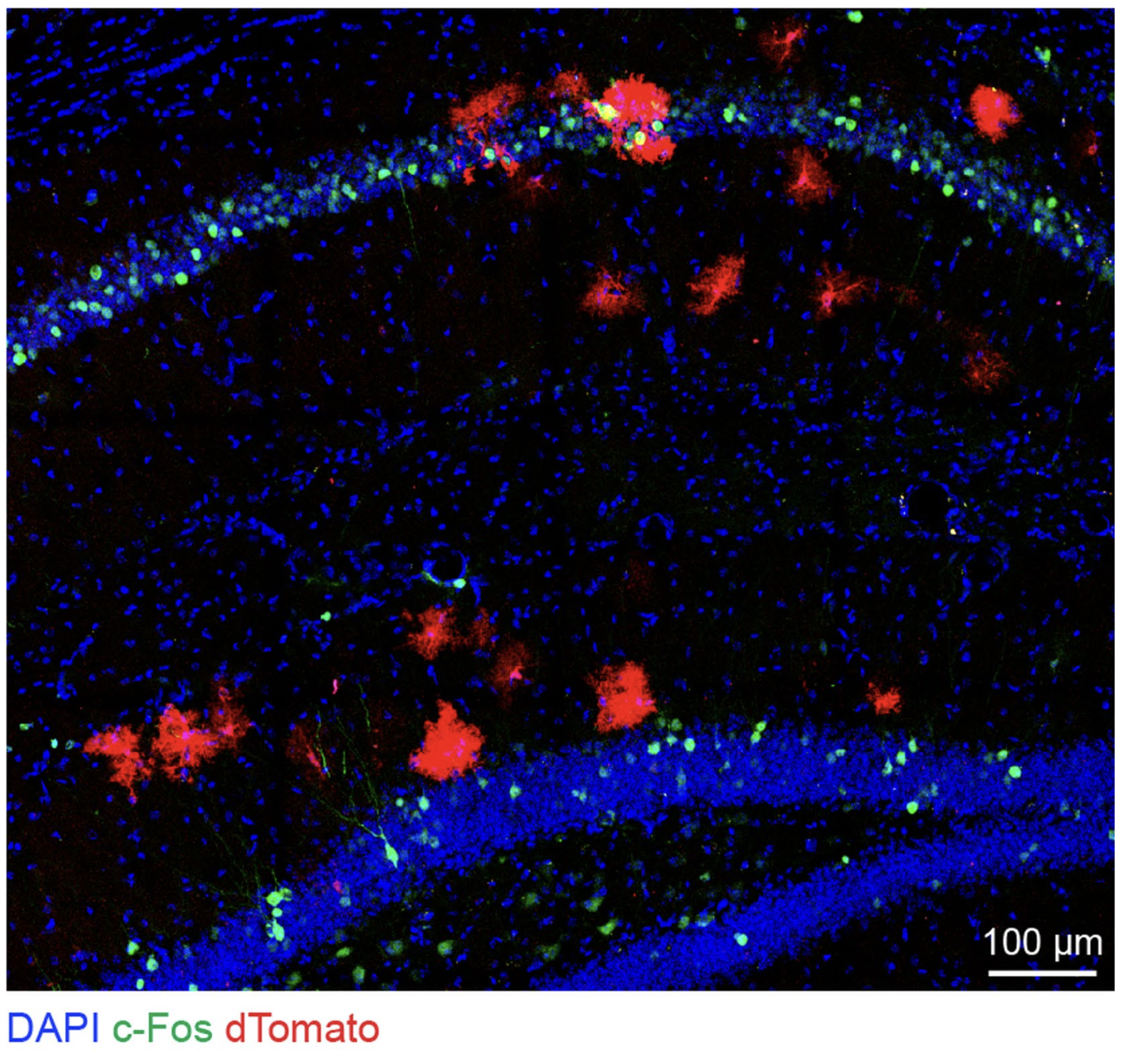
Despite their ubiquity throughout the CNS, astrocytes and other glial cells have been understudied compared to neurons. A major reason for this is the relative lack of experimental approaches for studying and manipulating glia. We develop new molecular genetic tools to facilitate our studies of glial biology. Examples include new viral tools for tagging learning-associated astrocyte ensembles (Williamson et al., Nature 2025) and intersectional approaches that allow for in vivo manipulations of astrocyte subpopulations (Woo*, Williamson* et al., Nature, in press).